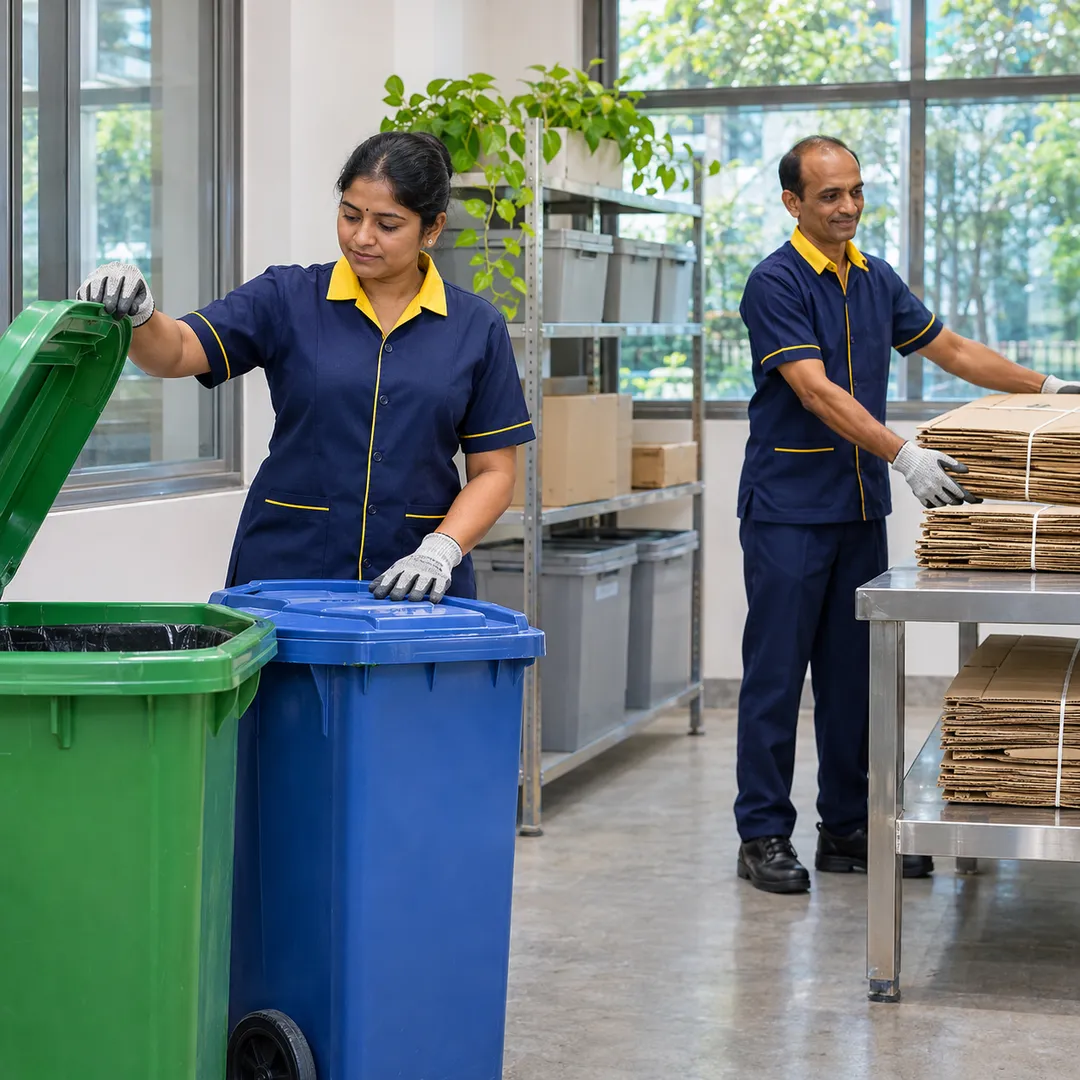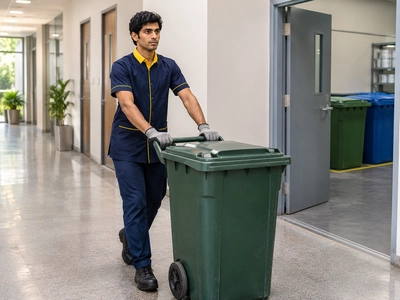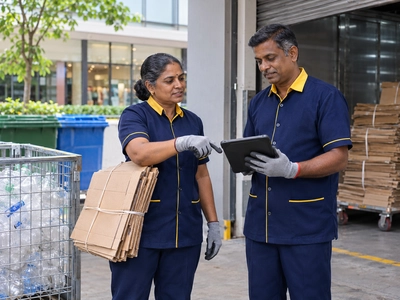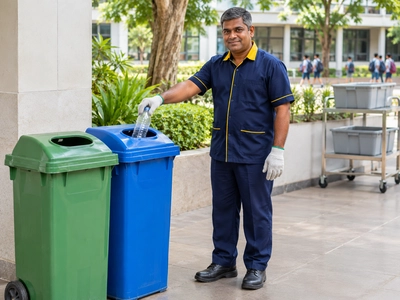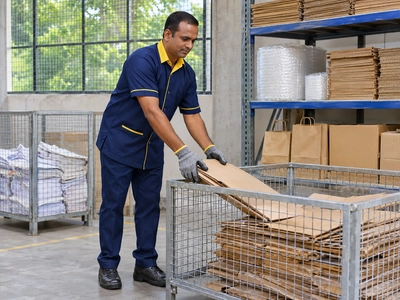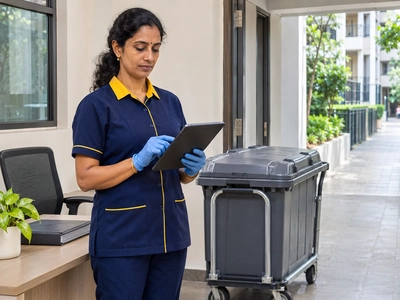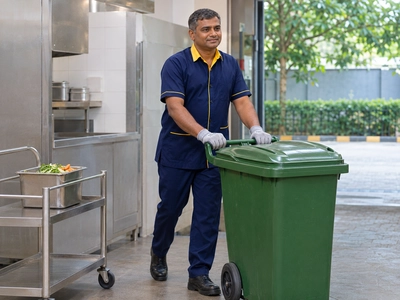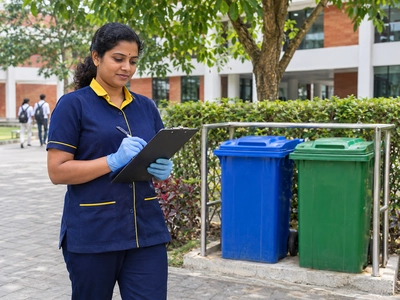
Scheduled collection, segregation, and internal waste movement to support workplace hygiene and organised facility operations.
SSI Facility Services supports organisations with routine waste collection, segregation, internal handling, and disposal coordination. Our teams follow agreed schedules and site procedures to help prevent waste accumulation and maintain hygiene across assigned areas.
Services are planned around waste types, generation volumes, collection points, and operating hours. Responsibilities for internal handling, external collection, recycling, and disposal are defined with the client before work begins.
Service coverage is established following an assessment of the facility’s routine waste streams and handling arrangements.


Handling Personnel

Collection Equipment

& Hygiene
Checks
We assess waste generation, define collection routines, and monitor daily work through site supervision and reporting.
Review waste types, volumes, collection points, access routes, and existing handover arrangements.
Agree waste categories, bin locations, schedules, handling responsibilities, and reporting procedures.
Carry out assigned collection and internal movement while maintaining segregation and site hygiene.
Review collection routines, report discrepancies, and coordinate corrective actions with responsible teams.
Our procedures focus on organised collection, suitable handling methods, and consistent follow-up across assigned facility areas.
Follow agreed routines and report overflow, missed collection, or unusual waste accumulation.
Use suitable protective equipment, handling tools, and hygiene procedures for assigned tasks.
Keep designated waste streams separate during collection, storage, and handover.

Maintain agreed service records and inspect collection points and handling activities.

SSI combines trained personnel, structured supervision, and site coordination to support routine waste-handling requirements.
Scheduled collection helps reduce accumulation around work areas, pantries, and shared spaces.
Defined routes, collection points, and responsibilities support orderly daily handling.
Segregation helps preserve suitable recyclable materials for agreed recovery channels.

Supervisory checks and reporting help identify service gaps and actions requiring attention.
Each assignment is assessed according to the facility’s waste streams, hygiene requirements, and agreed handling responsibilities.
Services can include routine collection, segregation support, internal waste transfer, collection-point upkeep, recyclable material coordination, and service reporting. Coverage is confirmed following assessment.
External collection, transportation, treatment, and disposal arrangements are defined separately. SSI can coordinate handover to designated service providers within the agreed scope.
Schedules consider waste volumes, facility usage, operating hours, storage capacity, and external pickup timings. Frequency can be reviewed when requirements change.
Teams follow the site’s agreed categories, use designated collection arrangements, maintain separation during handling, and report recurring segregation concerns.
Special waste streams require separately assessed responsibilities, trained personnel, and appropriate handling and handover arrangements. They are not automatically included in routine facility waste collection.
Employees receive task-specific training and site induction covering segregation, protective equipment, handling methods, personal hygiene, spill reporting, and escalation procedures.
Reports can include collection completion, segregation issues, missed pickups, handover details, and pending actions. Waste quantities are recorded where suitable measurement arrangements are agreed.
Share the facility location, waste types, approximate volumes, collection frequency, storage arrangements, and existing disposal process. Our team will discuss suitable staffing and service coverage.